
Blog
Latest Activity...
Vrbo Celebrates the Big 25, Airbnb’s Cleaning Protocol Now Required, Host-Only Fee Structure, Halloween Ban 10 replies
Chris L said:
I followed Airbnb's directions and sent the cleaning checklists to my housekeepers. We'll see what they say.Like cleaning walls? If your cleaners read those requirements, they will probably "fire" you.
Tag Groups, Advanced Tag Filtering & Automation, Editing Credit Cards on File, Door Lock Grace Periods 1 reply

Love using the Bad Guest Tag to not send review and future promotional requests.
Tag Groups, Advanced Tag Filtering & Automation, Editing Credit Cards on File, Door Lock Grace Periods 1 reply

Happy Thursday! We've got a great little group of updates to talk about (about 20) so let's get right to it!
New Features
We recently rolled out Tags and, in typical OwnerRez fashion, we immediately thought of 47 things we should add or update. This past week, we rolled out another batch of updates for tags that really kick it up a notch.
The first big part of this is Tag Groups. Tag Groups are just like they sound - categories you can create to group similar tags together for a purpose of filtering or displaying things. For instance, let's say that you want your properties to be displayed by "Style" on your website and allow website visitors to filter by different styles, and you want to define your own unique style options like "Luxury" and "Rural" and "Small and Cozy", Tag Groups let you do that. To get started, go to Settings > Tags and then click the new Groups tab. From there, you'll create your group name which in this case is "Style", then go to the tags grid, select those tags and use the Set Group button to find and set your group.

Tag groups have the potential to be used in a number of places, but let's demonstrate how they work with website or widget content. In the above example, we created our tag group and have properties broken down by luxury, rural or small and cozy, so we now want to display this on our website so visitors can select property by style. We'll go to the Hosted Website home page and set the tag group we want to show.
The Availability/Property Search settings on the home page now has the option to set a new Tag Group Filters setting. Here we'll select the Style one we just created.
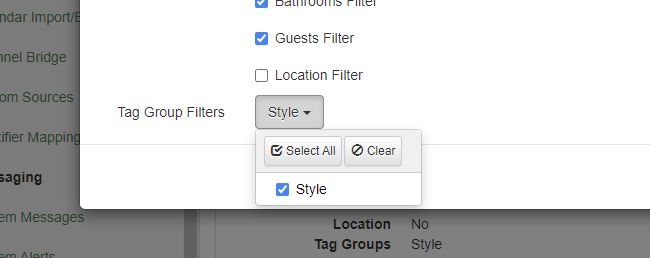
You can select as many as you want. Remember that we're selecting tag groups here, not tags themselves. The idea is to present website visitors with filter options within which are the tags themselves. After we save these settings, we now can go to the website and refresh it, and we'll see that the tag group is showing in the filter bar. Selecting a tag will limit the search results to only those properties that are tagged with that tag.
 Adding tag groups isn't the only thing we did. We also added Title, Description and Color settings to tags. This allows you to control the styling and presentation of how tags look around the system. Want your "bad guest" tags to show in bright red? Now you can do that!
Tags have the potential to add automation to your workflow because they allow you to custom-define and then slice and dice your data. To increase that power, we added tag criteria to triggers. You can now make sure certain triggers are sent (or not sent) based on tags that are set (or not set) on your properties, inquiries, quotes, bookings and guests. This is important because you probably don't want guests with a "bad guest" tag getting your friendly "Hey, would you leave a review?" post-departure email or the "Hey, want to book again for 20% off?" marketing emails you auto-send 3 months later.
We noticed that tag filtering on the main lists (bookings, quotes, etc) was too rigid. It only matched results for the booking itself, not the guest or property that is associated with that booking. For instance, let's suppose that you tagged a guest with the "bad guest" tag because they didn't pay their bill. Previously, if you filtered the booking list for "bad guest", no results would be returned because, technically speaking, you applied the tag to a guest record, not a booking. That wasn't very intuitive, so we changed it so that filtering includes associate guest and property tags. If you searched on "luxury" tags, any bookings that are part of a luxury-tagged property will now be returned. Filtering by tag now matches what users expect from a workflow standpoint.
The other big feature this week is the ability to modify credit card information stored on file for a booking. For years and years, OwnerRez users have rightly pointed out that once a credit card was recorded (or used) on a booking, there was no way to see, modify or change it. This matters because the email or phone on the credit card might be wrong - email templates send to the billing info is then sent to the wrong email over and over again even if you change the booking or guest point of contact info. Or maybe the guest's card expired and the number stayed the same - why not just change the expiration date on the stored card? Well now you can - all that is possible!
The feature itself is pretty simple. Pull up any booking, go to the Transactions tab and look half way down.

You'll see a list of Cards On File, showing any credit card associated with the current booking. If a card was put on file and verified, even if never used, you'll still see it here. To change the card details, click on the row and a window will pop up.

You'll be able to edit everything but the card number and security code - those remain locked on file for all time and cannot be seen or modified. However, every other part of the card info can be changed and saved. Rest assured, this will not change any historical information on previous payments or refunds, nor will it change what the card is supposed to be used for with respect to future payments or security deposit holds.
If a payment receipt email bounces, no problem - you can now go fix it!
Enhancements and Tweaks
Some eagle-eyed PM users noticed that our new Custom Statement Views didn't have columns for attachments or links. If you selected Description, it would only put in the raw original expense description but leave off the attachments and links that the default statements show. We added several new columns so that all versions of description are possible - plain, with attachments, only attachments on their own and even the attachment number. This should make sure your statements have all the content you're looking for!

If you've been using the Houfy channel integration, we've been steadily making improvements while working with the Houfy team. There are now more amenity, description and pricing fields synced across to Houfy. Because of limited time, the Houfy integration will continue to be improved steadily over time, but we hope these updates allow OwnerRez users to keep their Houfy listings more in sync and make fewer one-off updates on the Houfy side.
The tax detail report now shows party size columns (ie. adult/child counts) so those of you that need to file that information with your tax authority can now do that without jumping through hoops. Gotta keep the tax man happy.
Sorry, palm tree, but it's time to go. We are replacing our icons in OwnerRez to reflect our newer design, and be consistent everywhere, so you'll start seeing browser tabs and icons change. As part of that, we have updated our site and app icons and app splash screen on iOS devices.
This past week, we did some work on door locks.
First, we split the grace period settings on door locks so that you can have a different grace period on arrival versus departure. This allows you to give the guest more hours on the departure side than arrival, or vice versa, which is a common request by a lot of PMs. For instance, you don't want the guest to be locked out when departing - the door might swing shut behind them while loading the car - but you want to prevent them from coming in until the exact check-in time on the arrival side.
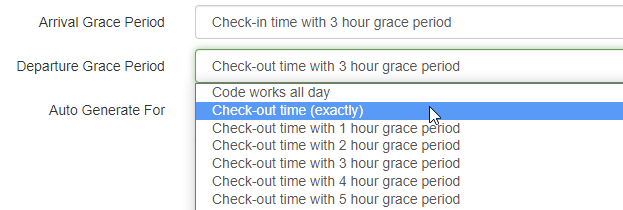 Second, we fine-tuned the grace period so that you could make it minute based (15, 30, 45, 60, 90 minutes) instead of just hours. This was also commonly requested by PMs because you may want to let the guest in a few minutes early but not a full hour. Please note that not all door lock providers allow minute increment. For instance, eRentalLock only allows hour increments so the minute options do not show for eRentalLock settings.
Ever try to schedule an email in the past? I'm not sure why you would want to, but we are now warning if you try to do that. Maybe you just shouldn't do that. 🤓
Last enhancement - we updated our Airbnb API and Channel Bridge code to detect if a full refund was made, by virtue of resolution adjustment, and make sure that the charges are removed on the OwnerRez side. As you know, we are fanatic about making sure booking financials are right. We push users to always adjust the charges, payments and fees to accurately reflect the current state of the booking - especially true after the booking is cancelled. This update should help automate that a bit more for Airbnb cancellations that were adjusted by a resolution or Airbnb admin.
Bug Fixes
Rate table week/month discounts. When displaying rate periods and types (week, month) on the rate table widget, we noticed that some LOS (length of stay) discounts weren't being calculated correctly, particularly when they were mixed with other discount criteria. This is now fixed!
Converted blocks need an owner. When channel bridge merges a block to a booking (converting the blocked-off time to a full booking) the property management settings, like owner and commission, were not being correctly applied. We fixed this - converted blocks now have the correct owner.
Templates used by old stuff. Templates have a cool little thing where each template will show you, if you click into them, what part of the system uses that trigger. For instance, it will say something like "Used by trigger Welcome Package sent 2 days before arrival" right above the template. However, we noticed that this was being gummed up by a bunch of old historical references like scheduled booking emails, so we cleaned those off so that it only shows active relevant references.
Where are the articles and blog posts? In case you hadn't noticed, our website has a great search area that will find content across all blog posts, support articles, forum threads, videos and more. We've taken time to make this produce accurate results, but we recently noticed that some blog posts and support articles weren't getting included, so we fixed that. Let us know if you see anything else not coming up! We pride ourselves on top-notch support 'round these parts. 🤠
Wrong text colors on Hosted Website widgets. There are pages on Hosted Websites that use widgets. In some cases, they are built-in or hard-coded widgets but the underlying functionality is the same. We noticed that some of these website widgets were not following the color settings of the parent website, so we fixed that to be consistent.
Seasons not saving if days are deselected. In a season, if you deselect all the allowed arrival/departure dates, it wouldn't save. This is a rare but legit use case, so we fixed it to allow this.
New Videos
This week, our latest videos are on quote statuses, the Listing Quality Analyzer tool and a great little overview on calendar import/export (iCal):


Integration with HomeToGo (and Free Bookings for 4 months!) 13 replies

We're happy to announce that we've partnered with HomeToGo! We hinted that this integration was coming for awhile, and now it's live for everyone!
HomeToGo is a "first class channel" in the OwnerRez channel manager, meaning that OwnerRez will be the channel manager, end to end, for your listings and bookings on HomeToGo. You can sync all content (photos, amenities, descriptions), rates, rules and availability, and you can take live bookings using your own credit card processing.
Even better - HomeToGo is currently running a Bounce Back Program with zero fees on all bookings until the end of March. Full syncing from OwnerRez, no fees, no commission, use your own credit card processing... what is there to lose?
Update: Bounce Back Program is no longer available.

Who is HomeToGo and what do they do?
As the world's largest vacation rental search engine, HomeToGo compares over 18 million offers from more than 2,000 trusted partners. From apartments, cabins, boats, castles, hotels, hostels, and everything in between, HomeToGo combines price, destination, dates and amenities to find the perfect accommodation for any trip worldwide. They operate 43 websites, including brands such as Tripping.com and Wimdu, across Europe, North America, South America, Australia, and Asia-Pacific.
HomeToGo’s CEO Patrick Andrae said, “We are thrilled to announce this integration, increasing our network of properties within the United States. OwnerRez is a reputable, well-positioned property management software and HomeToGo users will benefit from more competitive pricing when planning their next vacation.”
Our CEO, Paul Waldschmidt agreed, "Partnering with the world largest vacation rental search engine is a no brainer. This will provide our users more exposure on a global scale."
Join now to expand your reach to millions of new customers. Fast payout, direct guest communication, tailored cancellation policies, and fast integration – that’s how HomeToGo helps property managers maximize bookings and diversify their revenue streams.

Ready To Connect?
Get started with HomeToGo by completing this connection form, or check out our HomeToGo setup and connecting guide.
More Pandemic Parties, Muzzling Guests From Afar, Hawaii Plans To Reopen for the 4th Time, Escambia County Joining the Tax Grab 1 reply

Am I really the first to respond? I use Minut in my VR. Its great. Though I'm not too worried about parties/noise (Not enough parking nearby), its been helpful for tracking temperature, smoke alarms & occupancy. It makes a terrific burgler alarm; alerts when motion sensed (silent or alarmed).
Vrbo Celebrates the Big 25, Airbnb’s Cleaning Protocol Now Required, Host-Only Fee Structure, Halloween Ban 10 replies

Thank you.
Vrbo Celebrates the Big 25, Airbnb’s Cleaning Protocol Now Required, Host-Only Fee Structure, Halloween Ban 10 replies

Yes, you can create a surcharge that applies only to Airbnb - but, Airbnb rolls it into the rate anyway, so it won't help to do it that way.
Vrbo Celebrates the Big 25, Airbnb’s Cleaning Protocol Now Required, Host-Only Fee Structure, Halloween Ban 10 replies
Thank you for the response. I will price myself out of my market by raising 15% when people search by nightly rate. Just thought if there was a surcharge only for AirBNB that might be a way to do it so I at least get people looking at my property vs. others.
Vrbo Celebrates the Big 25, Airbnb’s Cleaning Protocol Now Required, Host-Only Fee Structure, Halloween Ban 10 replies
If you're using our API connections, or pushing rates using Channel Bridge, you can use those to increase your Airbnb rates by 15% compared to your standard OwnerRez rates. This is generally easier than doing it with a surcharge.
Vrbo Celebrates the Big 25, Airbnb’s Cleaning Protocol Now Required, Host-Only Fee Structure, Halloween Ban 10 replies
Darn Airbnb.... I'm one of the lucky ones who will pay that host fee starting 12/7/20. In place of raising my rates 15% and outpricing myself out of my market that way, is there a way to add a surcharge just to Airbnb bookings? I'm not a fan of the bait and switch and adding in all sorts of fees, but just looking at my options moving forward.
New Incoming SMS Alert, Templates and Message Clarity, Vrbo API Payment Schedule, Travel Insurance for RTB and non-US 4 replies
Q4 of this year or Q1 of 2021. We just had a meeting with their team earlier today about a bunch of stuff and this came up. Messaging and reviews are the big things coming and both are very near-term.
Murrieta’s New Ordinance, Chicago Bans One Nights, Aspen Tax Grab, Miami Beach Lowers Fines 2 replies
Happy Friday! The world series is just around the corner.⚾ Football season is just getting started.🏈 And the Lakers just won their 17th NBA championship.🏀 Now that we’ve got you all caught up on sports, let's talk about the vacation rental industry.
Murrieta, CA has decided to move forward with an ordinance that allows “hosted” short-term vacation rentals to continue in the city. With the decision comes a new framework for “non-hosted” (owner is not onsite) properties as well. This is the result of increased complaints about vacation rentals causing disturbances such as noise, overcrowding, trash and safety concerns. We’ve been seeing a lot of this lately and have posted about it last week the week before that, a few weeks before that and earlier in the summer… Now why would the city do this, to help out the neighborhood? Or for the city to collect more tax? Surprise surprise - the new ordinance sets up the collection of a Transient Occupancy Tax. This amounts to 10 percent of the rent charged by the operator.
Another one bites the dust. Chicago has officially banned single-night rentals in response to the ongoing COVID party issue. Airbnb has implemented policies to combat this but they’re not always easy to enforce. Imposing a minimum stay seems to be the only way to detour partygoers. But some would ask, won’t this hurt my business? The short answer, yes. According to a report from AirDNA, one-night stays on Airbnb earn an average 17% more revenue throughout the year than those with longer minimums. As more and more cities adopt these guidelines, we urge those partygoers to take a chill pill.💊
Aspen City Council has passed legislation that requires short term rentals to have a business license and a vacation rental permit. This enables the municipal government to collect more revenue, which is currently set at 2% lodging and 2.4% sales taxes, because the license and permit will track who is actually renting out property. The business license will also include a $100 fee, so Aspen is getting their money’s worth all at once.
Did you know that violating short-term rental rules in Miami Beach could cost hosts between $20,000 and $100,000!? These fines were routinely considered the most severe in the country. As of Wednesday this is no longer the case. A reduced fine structure has been implemented at $1,000 for the first violations and $5,000 for repeat violations. This is the first time since 2016 that the fines have been lowered. I guess if you start out high enough, they do go down once in awhile.
If you haven’t already check out the Product Update we posted yesterday. Also if you missed our Vrbo Over the Years post check it out, you can see 25 years of homepage changes! That’s all for this week, have a great weekend!😁
Integration with Touch Stay 1 reply
We're pleased to announce that we have partnered with Touch Stay. The integration allows OwnerRez users the ability to provide digital guest welcome books. This will empower your guests and stop the questions, leaving a smile on their faces.

About Touch Stay
We’re all about happy guests! #MakeGuestsHappy
Touch Stay digital guest welcome books help holiday and short-term rental hosts and managers put a smile on their guests’ faces. Because happy guests leave great reviews. And happy guests remember, refer, and book again.
Place everything your guests will ever need to know before and during their stay just a click away in your Touch Stay app. Finally lose that rather tatty and unloved paper binder from your home!
Completely customized to your brand, including your snazzy colors and slick logo. Share insider tips and supply practical information with easy and intuitive navigation.
Our software aims to make guests’ stays more relaxed and more informed. Using Touch Stay, lodging owners can create beautiful digital welcome books that provide guests everything they need to know about the property and surrounding area.
Here is a list of reasons why you should use Touch Stay:
- You become more efficient
- Your guest takes control
- Future guests read rave reviews
- Share all your insider tips
- Supply practical information
- Any device, any language
- PDF & print capability
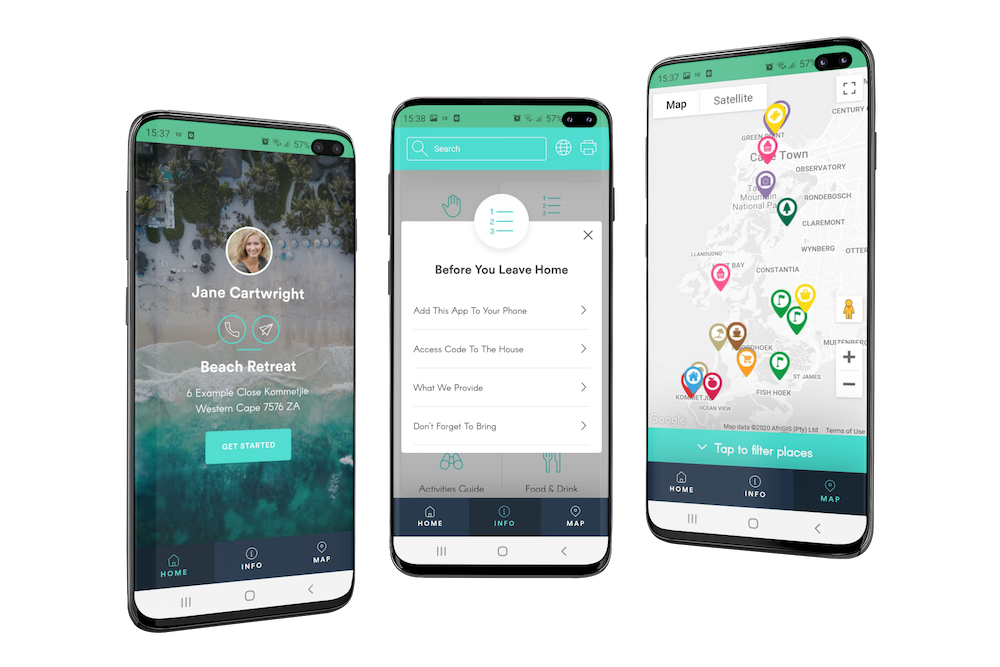 All your content is stored in one single online location. The Touch Stay mobile web app packages that content in an easy and beautiful form. You then share your guest welcome book by sending guests a link (no sign up or app to download!)
Get started with Touch Stay by following this link: https://touchstay.com/
Check out the OwnerRez support doc here: https://www.ownerrez.com/support/articles/Touch_Stay
New Incoming SMS Alert, Templates and Message Clarity, Vrbo API Payment Schedule, Travel Insurance for RTB and non-US 4 replies

Is there a timeline associated with VRBO being included in the unified inbox? I'm most excited about the unified inbox and streamlining communication between apps, devices, etc. This will be a huge step forward!
New Incoming SMS Alert, Templates and Message Clarity, Vrbo API Payment Schedule, Travel Insurance for RTB and non-US 4 replies
Yep. Most likely Vrbo first. Lot more API usage there, and we have a really good rapport with the Vrbo IPM team.
Integration with VRScheduler 4 replies

Anyone have any hands-on experience comparing ResortClean and VRScheduler? I definitely need one of these solutions; I attempted to implement ResortClean two and a half years ago (and AFAICT, I was the genesis for ResortClean integrating with OR after a conversation with Jim there), but I was never able to get my cleaning companies to agree to use it because the learning curve and overhead was too high. Perhaps the UI has improved in the last couple of years--I still have the initial 50 credits I paid for, ha, so it'd be nice to use them.
But before I push my cleaners to adopt it, maybe I should look into VRS instead. Any advice/experience from others here who have used one or both?
Vrbo Celebrates the Big 25, Airbnb’s Cleaning Protocol Now Required, Host-Only Fee Structure, Halloween Ban 10 replies
I followed Airbnb's directions and sent the cleaning checklists to my housekeepers. We'll see what they say.
That said, I actually skimmed through the checklists and, at least superficially, I don't find them too onerous--certainly FAR better than the enhanced cleaning protocols they were advertising before (which involved removing and washing curtains between every guest...sheesh). For the most part, it's pretty much a good checklist that a professional cleaning company should be doing between guests anyway--and which mine are pretty much already doing. I may be wrong; we'll see what they say when they read my email later tonight. :)
New Incoming SMS Alert, Templates and Message Clarity, Vrbo API Payment Schedule, Travel Insurance for RTB and non-US 4 replies
> As we work on adding other channel messaging (eg. Vrbo or Booking.com)
Is that a hint towards any functionality coming soon? :)
New Incoming SMS Alert, Templates and Message Clarity, Vrbo API Payment Schedule, Travel Insurance for RTB and non-US 4 replies
Happy Thursday everyone! We've been quiet for a few weeks, but our hands haven't been idle! There was a low-level infrastructure change we had to make that took coordinated effort to make sure there was no downtime for users. With that out of the way, we've spent the last week pushing out a bunch of new tweaks and fixes (36 in total and 5 others in a previous week) that have been tested and ready to go. Buckle your seat-belts! 🚀
Enhancements and Tweaks
The feedback by our SMS users has been great! Tons of great ideas, many of which we've already worked on. However, the overwhelming majority pointed out the same weakness - there was no way to know when a new incoming SMS message arrived. We just added a new system alert for SMS Messages that will fire off an email anytime one comes in.

As with all system alerts, you can turn this off in the Settings > System Alerts area. In the future, we plan to upgrade this system alert (along with others) to provide other alert mechanisms such as in-app, text or push notification. For the time being though, this email alert should make sure you don't miss any important SMS messages.
As we continue to improve the inbox, conversation thread and communication history in OwnerRez, we strive to make as many small changes as we can every week, even in weeks where we aren't focused on messaging. In the past couple of weeks, we've tweaked a number of messaging related things to add clarity and simplicity.
There are now "Send" buttons from the SMS and Airbnb triggers on bookings (in the Email tab) which will link across to the guest conversation with a prefilled template of what the trigger would send. This is similar to how email triggers have always worked where you can instantly see, and send, email triggers for a booking if it was missed or if you want to send it again.
And when you get to the guest conversation area, notice the "Use Templates" button that is now available. This provides a quick list of templates that you can apply to the current guest and booking (if there is a booking) right inline.
 The list of templates is currently limited to only SMS and Airbnb templates because email cannot be sent from the guest conversation area. If you don't have any SMS or Airbnb templates, the template will not be shown (or might be empty). In the near future, we plan to add email functionality to this area as well.
You'll notice that we also added an Airbnb icon to messages that are transmitted via Airbnb platform versus SMS or email. In a unified inbox, there can often be confusion as to what message came from where. We hope the Airbnb icon adds clarity. As we work on adding other channel messaging (eg. Vrbo or Booking.com) we will show icons for those channels as well.

SMS and Airbnb messages now link to the communication history area, like emails, so that you can see the original message, why it was sent, the exact time and so on. This follows what email has shown for a long time, so we wanted to make it consistent across all types of messaging.
 The message action button (shown in the above picture) will contain more functionality in the future, so click on it every so often and see what else you can do.
By the way, did you know you can use the action button to move SMS messages from one guest record to another? This is helpful for cleaning up the inbox when incoming SMS messages get associated with the wrong guest record (eg. you might have two guests with the same mobile phone number).
Over on the communication history grids, we updated the columns for the SMS and Airbnb grids to make better use of screen real-estate. The From and To columns were collapsed away and the Message column now shows a much more-readable concise format and trims everything after the first few hundred characters. This looks better on both desktop and mobile.
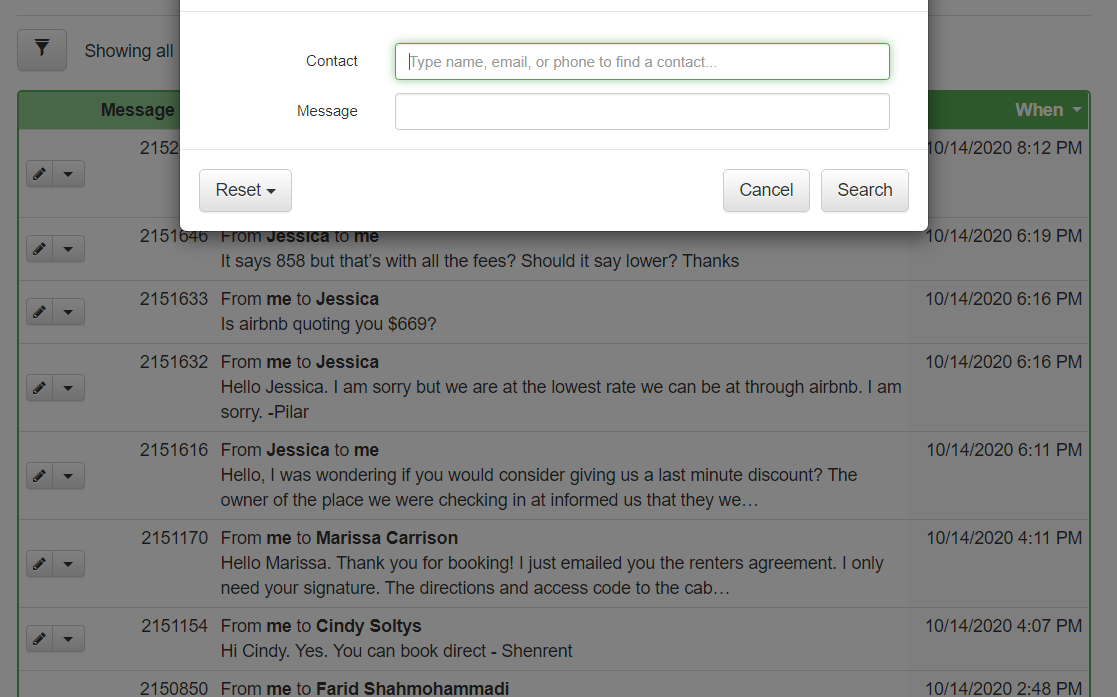
We noticed that SMS and Airbnb templates did not have a Used By column like email templates do, so we added that as well. Your SMS and Airbnb templates will now tell you where they are used (eg. on triggers and how many).

If SMS messages fail to send, we now highlight the failure reason on the email alert that you get. Please bear in mind that failure reasons are provided to us by our telephony carrier and are sometimes generic in nature. "Not available at this time" or "Currently unreachable" may not be clear, but it's the only information we get. Typically, this means that the phone number is not a mobile phone or SMS has been blocked by the recipient.
That's it for messaging. Let's move on to rates, channels and other updates.
Our Listing Quality Analyzer tool is an important resource for seeing your properties at a high level and knowing what is wrong or incomplete. We just added another check to Listing Quality Analyzer to see if you have any minimum night rules that are longer than your maximum night rules including scenarios where minimum nights are set in seasons or spot rates down-stream. If you haven't run Listing Quality Analyzer in awhile, give it a quick spin to see what it says about your properties. You might be surprised!
We recently released Custom Views for Owner Statements, and it's been a big hit, but we noticed that expense description columns stopped showing attached files if you used the custom Description column instead of the default views. We updated the custom Description column to use the same language and attachments that the default uses, and we plan to add more custom columns that allow you to pick and choose which type of description and attachments to show. For now, the Description column will display what you were used to before.
Airbnb has a number of description fields that don't always line up with OwnerRez's description fields. We have a support doc that shows the field differences, but that still doesn't cover all scenarios. We noticed Airbnb's listing nickname field - the one that they show internally in the Airbnb control panel - was only allowing 20 characters, so we changed our mapping to use the first 20 characters of the property name as the Airbnb nickname if no property code exists. By default, it will try to use the property code.
If you use a pending/confirmation or Request To Book process for your bookings, you might have gotten questions from guests about why Travel Insurance doesn't work. If guests selected Travel Insurance during booking, but the booking was set to pending, the Travel Insurance request would have to be made again, and that was often hidden from the guest. We changed our Travel Insurance request process to store the request and process it after the booking is confirmed, and we made sure it works with a variety of confirmation processes and timelines.
We also added Travel Insurance options for non-USD bookings. If your booking is in a non-USD currency, the guest can still select Travel Insurance and be presented with a screen that will allow them to select a USD amount for their trip costs. This way, their booking can still be covered if they're a US resident and wish to pay for US-based Travel Insurance no matter where in the world they are traveling.
We also tweaked the standard booking billing information (ie. what the {BBINFO} field code shows) in our booking confirmation email to mention CFAR Travel Insurance and be more accurate as to what can be purchased and when. This should reduce guest confusion.
Last update on Travel Insurance - we now transmit Travel Insurance dates to the carrier based on the property time zone. This is important because it means that UTC (ie. London Time) is no longer a factor in determining if the Travel Insurance purchase date is the same calendar day as the initial booking date. Your own time zone (ie. the time zone of the booked property) is now what makes the determination. For instance, properties in California will now have 8 hours of extra time, than they had before, for the guest to see and purchase Travel Insurance before the calendar day ends.
Over in the world of channel integrations, we made several small but important changes.
New cleaning amenities have been added and are synced to Vrbo via the Vrbo API. Some of these cleaning amenities may have existed for Airbnb but were not tied into Vrbo. Others are completely new. We also added industry association and standards so that you can advertise that your listings meet certain industry or regional standards.
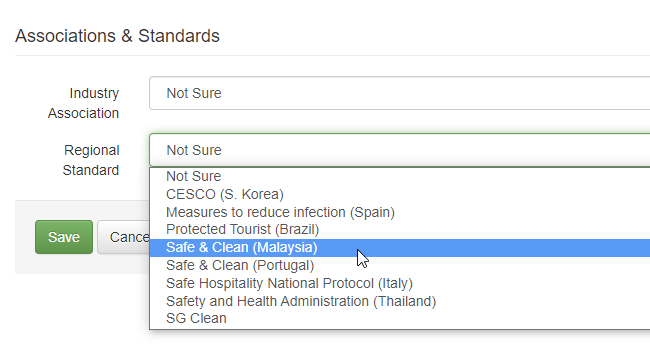
Be careful when selecting these associations that you actually comply. There may be negative repercussions with certain governing bodies if you select them without actually meeting the specifications that are set. As with taxes and other legal settings, OwnerRez is not responsible for and does not transmit anything to governing bodies based on selections like these. This is for your advertising purposes only.
If you use manual payments on Vrbo API or "Request to Book" mode, we've updated our payment logic to be more intuitive and follow your property rules. For starters, if payments are manual, we do not schedule any automatic second payments and we make sure payment reminders are set to go out. This will make sure your bookings are in keeping with how your direct booking rules are set. Again, this is only for properties that have second payment rules set to not collect automatically.
Once you've confirmed a pending or "Request to Book" booking, we then follow the OwnerRez payment schedule instead of the one in Vrbo where they conflict. If you manually clear the pending flag, OwnerRez will clear the auto-payments on the channel rules for that booking as well.
If you use the default OwnerRez renter agreement for your bookings, give that a quick look when you get a free minute. We changed it recently to a bigger better style with more stuff in the header and first couple of paragraphs. This is a format we've been using for awhile in our Concierge Setups, and we wanted everyone to have it.
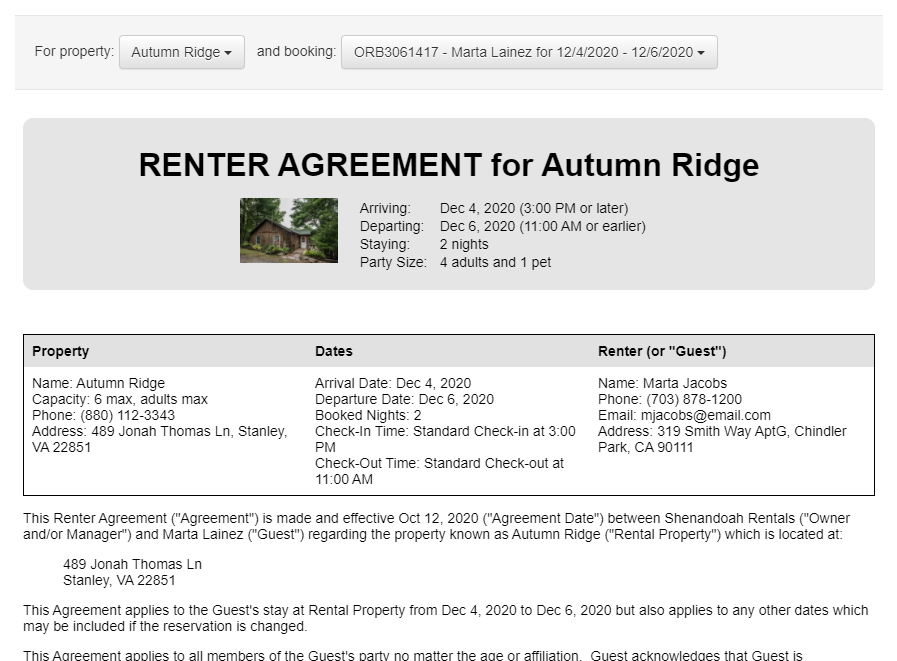 To see what it looks like, go to Settings > Legal Agreements, click Create, click Prefill From > Default System Agreement and then click the top Preview button. No need to save the agreement because the system will use this by default if you don't have one on file.
Ever wonder why an Expense isn't showing up on a Owner or PM Statement? Previously, you would email the help desk and ask why not. We'd spend a bunch of time digging into it and then explain that it was already remitted on a previous statement. You can now see this for yourself. Every Expense now shows the Owner and PM Statement it was remitted on or multiple statements if it was picked up several times. It will also link to the statement so that you can click over and see it.

In case you missed it, please be aware of the changes we made recently to the Affiliate Program and the upcoming changes to Legacy Rates and CC Processing Fees. That blog post covers everything that will happen in detail, so please take some time to read it thoroughly.
And hey, did you notice you can comment on blog posts again? In the recent blog overhaul, comments accidentally got removed. Don't worry - we really do like hearing from you. Go and and get back to commenting!
Last bit of housekeeping news... Continue watching our Support Home and All Videos pages. We believe deeply that support is part of engineering, and our dev team works every week to add features that benefit our support area. You'll notice that our support home, articles and video pages change constantly, usually every week. You can now see the Latest Video uploads on the Videos home page so look back for new ones to watch.
Bug Fixes
Friendly error messages on Airbnb API. There are some places on the Airbnb API dashboard where we have to make live calls to Airbnb while you sit and wait. You might have pressed a button to check some rates or tax settings. If Airbnb is down or slow, the function used to crash out with an ugly message. We are now checking for that and showing something a bit more graceful.
Slow rate editors. We noticed that the rate calendar and seasonal defaults editor was loading slow on some devices because of a special piece of code for Apple devices. We removed the problematic code and everything should be fast again! 🎆
Hosted Website sub-menu text casing. On Hosted Websites, we noticed that header menus were sometimes not consistent where the sub-menu had a different text casing (eg. upper case or lower case) than the parent text. We fixed this so that they would be consistent.
Double saving on rate editors. We fixed an issue on the rate editors where hitting the Enter key when the save button was already in focus caused the rate to be saved twice.
Rate rounding on rate editors. We noticed a rounding error where all amounts would round to the nearest 5 no matter what the real rate number was. This was happening on both the rate calendar and seasonal default editor. This has now been fixed.
Ignore empty-rate seasons for rates. If a property had a season assigned but no seasonal rate was set for that same property, the rate engine was still picking up that season instead of looking for another matching season that had a rate. We fixed this so that the first season with rates is being selected instead of an empty-rate season.
But don't ignore empty-rate season for other things. The above fix actually caused a new bug where we stopped using empty-rate seasons even though they are necessary for rules and discounts and other things from time to time. Found and fixed!
Listing Quality Analyzer suitability fix location. When Listing Quality Analyzer finds something wrong, it also points out how to fix it. For suitability checks, Listing Quality Analyzer was pointing to the right wrong fix location, but we have changed that to be correct.
Clear numeric entries on rules page. When selecting no pets/children, we are now clearing numeric entries so validation issues don't occur.
No themes on custom field headers. When you create custom field headers, themes never apply, so we optimized.
Renter agreement signed trigger timing. Triggers can be configured to send when a renter agreement is signed, but renter agreements can be signed at the same time a booking occurs. What if the quote is accepted and the renter agreement is signed, but the booking is finished being created? There was some wonkyness with the timing around new bookings, signed RAs and payments. We streamlined this so that trigger events would consider everything before failing or being skipped. And yes "wonkyness" is the technical term for it. Wonkyness gone.
Calendar Import (iCal) cancellation detection. We found a regression bug in our calendar sync engine that was marking time as missing instead of forcing a cancellation through. This should help you get less of those "Calendar sync error" emails that everyone loves. In the near future, we plan to simplify our calendar sync engine to be more streamlined and do less magic. Now that channel API integration is available for all users, iCal is less necessary, so we want to make it more straightforward when it comes to blocking and un-blocking time.
Hosted Website menu names with apostrophe's. Apostrophe's in menu names were not displaying correctly, but that has been fixed.
Custom statement view in portal access. Once you create a custom view for a statement, the owner needs to be able to see it, right? We allowed that in portal access, but we went to far and allow them to also change the view with some buttons that weren't supposed to show. That has now been fixed - the owner can still see the custom view that you assign but nothing else.
Timezone on trigger run date. We fixed the timezone on trigger run date. We are now checking to make sure that the run date and timezone are correct against the date the trigger was created. In case you didn't know, when the trigger was created is compared against the booking dates to make sure that new triggers don't accidentally get fired against historical bookings.
Owner statement negative pro-rate. We fixed an issue with booking pro-rate where certain date ranges would make bookings be included that were pro-rated to a negative amount since the booking dates were past the statement date. This has now been fixed.
SMS billing. If you've been using SMS Messaging, you may have noticed some funny numbers on your invoice. No one was over-charged (in fact, several users were undercharged) so no worries there. But we fixed the counts and numbers to be correct. Historical invoices should also be correct as well.
Stop disabling SMS! This was a funny one. Since SMS Messaging is not open to all users, it's hidden in the billing area. When users changed their premium features, the SMS Messaging feature also got turned off and, because it's not publicly available, they could not turn it back on. Ouch. All good now though!
Legacy Rates upgrade page failing for many properties. We optimized the Legacy Rate upgrade page to handle many properties/rates at once. It used to time-out for PMs that have a lot of properties, but it's all good now.
Trigger grid filter for template filter. The Triggers grid used to explode if you used the "by template" filter. Now it doesn't.
Australian date handling on widgets. Just like it sounds. All set now! A word on this - we know that our date, currency and culture settings are inconsistent between the control panel and guest sides, and it's something we know needs to updated. Thanks for your patience!
Season minimum nights rule overriding property weekend nights rule. Again, just like it sounds. Weekend night rules should always have priority over minimum night rules no matter how many levels of minimum night rules you have. This is now fixed.
New Videos
Make sure to check out our latest videos. Up above, I mentioned the All Videos page and how it shows the latest uploads. I'm also going to start dropping them here in the weekly Product Update so that you see them here too. Let's start it off with the latest videos from the last couple of weeks:
 6:04m
6:04m
Rules - Change Restrictions, Booking Window, Forced Gaps
 5:31m
5:31m
Rules - Minimum Nights
 3:10m
3:10m
Rules - Lead Time
 10:47m
Messaging - Overview
 7:07m
7:07m
Messaging - Creating & Using Themes
 10:35m
Quotes - Overview Video
 10:02m
Bookings - Understanding a Booking & Its Parts
 3:51m
3:51m
Property Management - Access for Cleaners & Third Parties
Vrbo Over the Years - 25 Years of Homepage Changes 2 replies
Welcome! It was fun to put together. We will be adding to this over time as we see other changes to add.
Vrbo Over the Years - 25 Years of Homepage Changes 2 replies

As one of the legacy VRBO employees hired back in the "good ole days" when the site was still owned and operated by the original founders, I found this blog post fun to read. All of those home page versions (from 2002 on) are familiar to me and my years at VRBO working for the original founders were the best years of my career at VRBO and Homeaway. Thanks for the walk down memory lane!
Vrbo Celebrates the Big 25, Airbnb’s Cleaning Protocol Now Required, Host-Only Fee Structure, Halloween Ban 10 replies

I long for the "Craigslist of vacation rentals." Craiglist is still Craiglist because Craig Newmark isn't greedy. VRBO is now swallowed up in a megacorp because all the players down the line got greedy.
Vrbo Over the Years - 25 Years of Homepage Changes 2 replies
As Vrbo celebrates their 25th anniversary, we wanted to take a look back at their long history. Vrbo started the first online vacation rental service back in 1995 and were really the first ones to define what the “vacation rental industry” was. Until Airbnb came along, Vrbo completely dominated the vacation rental industry and set the tone for everyone. Even as competitors started to spring up, Vrbo continued to grow and now provides access to 2 million whole-home vacation rentals in 190 countries across the world.
OwnerRez is proud to be one of Vrbo’s few Preferred Partners. We fought hard for channels to work with us directly, and we fought hard for our smaller homeowners users to get access as well. We meet with Vrbo monthly to ensure OwnerRez is up to date with their latest features and to look for improvements on both sides. Our partnership with Vrbo is strong and we look forward to working with them for many years to come!
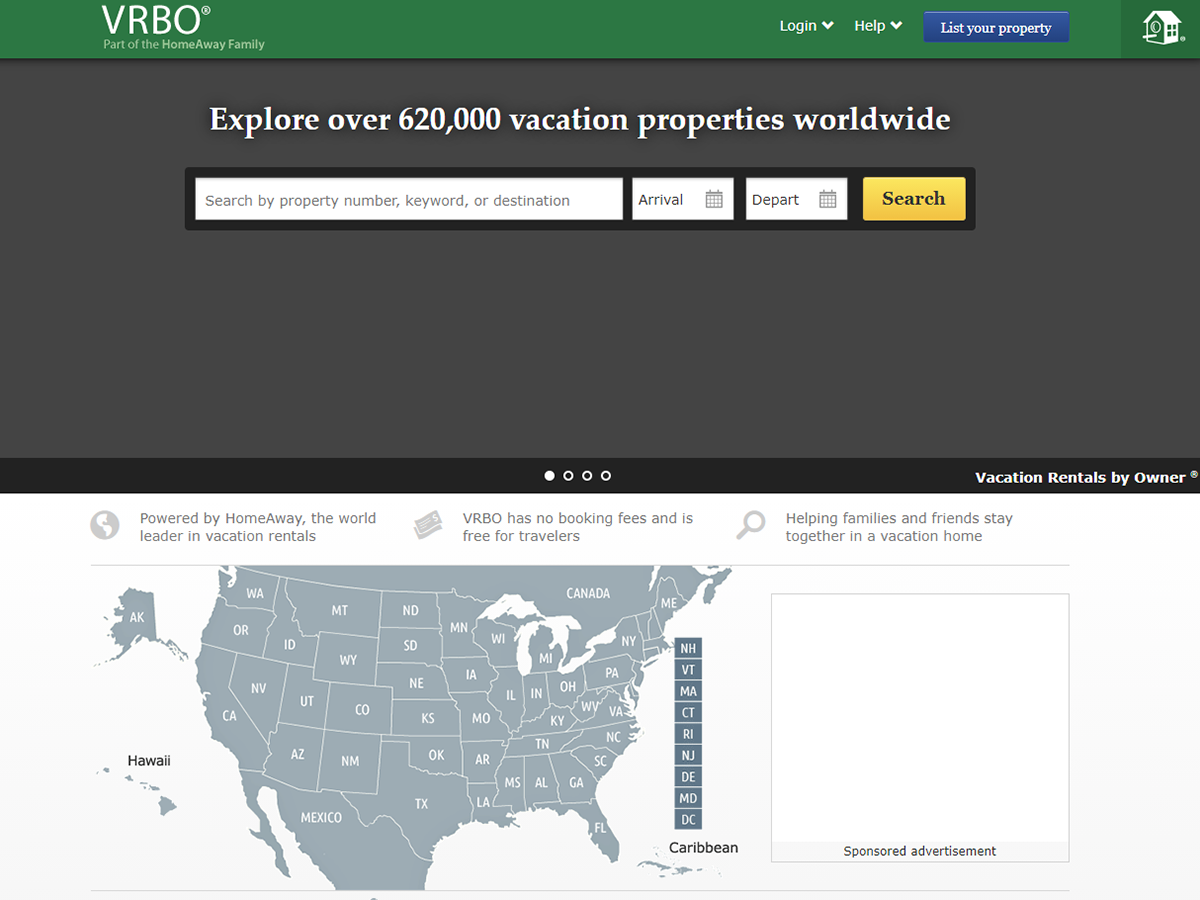
We thought it would be fun to take a look back at Vrbo’s humble beginnings and remind our older users about the Good Ole Days. If you’re new to the vacation rental industry, these old images should make you smile as well.
The following images are courtesy of Archive.org. Click on the below thumbnails to see a larger version.


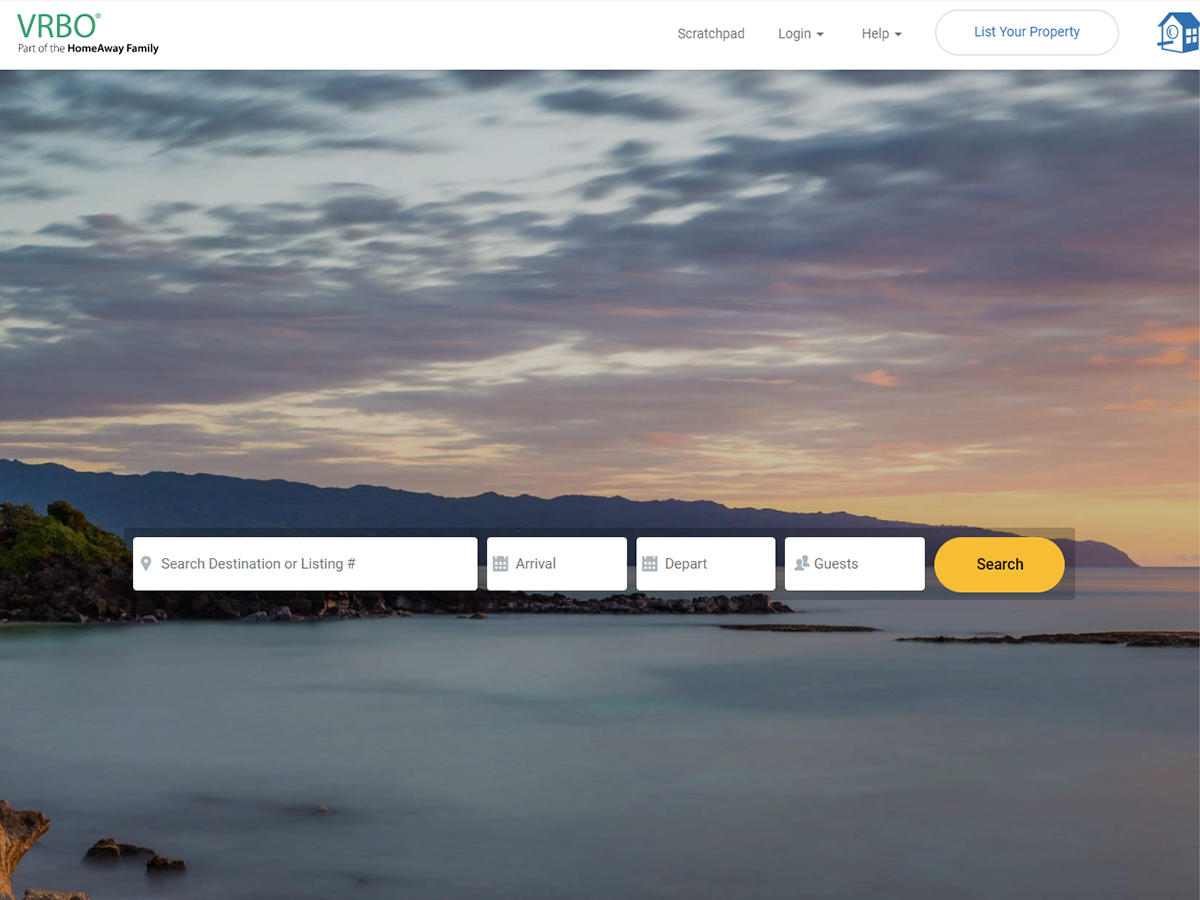

We haven’t always agreed with every decision Vrbo has made over the years. In fact, we’ve held our breath and grimaced along with the rest of you at times. But it’s undeniable that Vrbo did a huge amount of work decades before many of us got started, and we respect the long path they forged. We respect and admire that, and we wish them luck as they celebrate this 25th anniversary.
Vrbo Celebrates the Big 25, Airbnb’s Cleaning Protocol Now Required, Host-Only Fee Structure, Halloween Ban 10 replies
Airbnb can shove it. They are more trouble (and bring more problematic guests) than they are worth. I wish it finally imploded and went back to renting unpermitted basements and attics and spare couches - that is what they are good at.
Vrbo Celebrates the Big 25, Airbnb’s Cleaning Protocol Now Required, Host-Only Fee Structure, Halloween Ban 10 replies
Good news, it’s a three day weekend!🌴
Vrbo is celebrating its 25th anniversary by giving out 25 stays for free at highly-rated vacation homes on their platform. They’re including houses, cabins, condos and wait for it...castles!🏰 “We wanted to recognize and show gratitude to our customers who have trusted Vrbo with their family vacations over the past 25 years. To celebrate this milestone, we are inviting families to look back through their old family photos to reminisce on their most precious memories together,” Lish Kennedy, Vrbo’s VP of Global Brand Marketing. If you’re feeling lucky, you can enter the contest by posting a family vacation photo with the hashtag #VrboTurns25 on either Facebook or Instagram. Each vacation will be worth 5k. So get posting!
Do you remember what Vrbo was like 25 years ago? No messaging, no platform transactions, no API integrations, no Expedia, not even HomeAway. For those of you that are new to vacation rentals, think of “Craiglist for vacation rentals”. Someone should put together a montage of all the Vrbo homepages over the years.
Airbnb has decided that all hosts must agree to their Enhanced Cleaning Protocol. This all starts in October and will be rolling out into 2021. The Enhanced Cleaning Protocol started as an opt-in measure back in June, but now Airbnb feels everyone needs to be squeaky clean (or at least claim to be).
So what does this mean for you?
- Step 1: Prepare for safer cleaning - Ventilate rooms before and while you clean. Gather the right cleaning supplies. Review the safety guidelines for your chemicals. Wash your hands for at least 20 seconds with soap and water. Wear protective equipment at all times. Take out all the garbage. Collect all dirty linens throughout the space. Unplug before cleaning.
- Step 2: Clean dust and debris - Wash all linens at the highest heat setting recommended by the manufacturer. Wash all dishes, and empty the dishwasher. Dust the space, and sweep or vacuum the floor. Clean all hard surfaces with soap and water. Clean all soft surfaces based on the manufacturer’s instructions.
- Step 3: Sanitize with disinfectant - Once a hard surface is clean, spray it with disinfectant. Let the disinfectant stay wet for the specified length of time. Allow to air-dry.
- Step 4: Check your room-by-room checklists - Double-check that all high-touch surfaces were sanitized. Note any maintenance issues or missing items.
- Step 5: Reset the room - Dispose of and wash your cleaning supplies. Empty and clean the vacuum after every cleaning. Safely remove any cleaning gear once you’re done cleaning. Wash your hands for at least 20 seconds with soap and water. Visually assess each room to ensure the stage is set for the next guest. Set out cleaning supplies for your guests. Restock your cleaning supplies.
If this all sounds like a lot, well it is...just in case you need to adjust your cleaning fee, check out our support doc on that.
Apparently the Airbnb board room has been hard at work. Starting December 7, 2020 Airbnb is shifting all software-connected hosts to a host-only fee structure called simplified pricing. We mentioned this about a month ago and speculated that it would be pushed to other markets soon. That didn’t take long.
Before you worry, this does not affect hosts with a majority of their listings in the United States, Canada, Mexico, Bahamas, Argentina, Taiwan and Uruguay. So most of you folks won’t be affected, but they’re clearly moving to a booking.com model. For those of you that do qualify, Airbnb will deduct a flat 15% host service fee from each payout and won’t charge a guest service fee. As always, you can adjust the Airbnb rate in the OwnerRez API settings to offset the host fee.😉
Airbnb has also banned one-night stays over Halloween weekend.🎃 Airbnb even went a step further and canceled any existing one-night stays for October 30 or October 31. Hosts with existing bookings that fall into that category would “still receive payment” according to Airbnb. This is all due to the problematic house parties that we posted about last week and a few weeks before that and earlier in the summer...
Airbnb Rolling out Host-Only Fees, L.A. Cracking Down, San Diego House Parties Shut Down 2 replies
"maybe I should turn this on"
Do you have listings in Australia, New Zealand, South Korea or Thailand? It's currently only available in those markets and will be forced on everyone there.
However, they've announced that they're expanding this in the past few days, so we expect it to move to many other markets soon.
Airbnb Getting Less Extenuating, Converge Refresh, Tenn. Tax Changes, Aspen Back Taxes, Sonoma Purging Licenses 2 replies
Keep us posted. I'm curious how this goes as some neighboring states (eg. VA) are rumored to be preparing the same.
Out with the old, in with the new - last quarter cleanup 5 replies
At the moment, no on rounding up, but that's something we're looking into. Thanks for your feedback, Ella!
Airbnb Getting Less Extenuating, Converge Refresh, Tenn. Tax Changes, Aspen Back Taxes, Sonoma Purging Licenses 2 replies
I am still thinking that something is not working re latest TN tax change. I removed TN and County sales and only left 3% lodging in place. The total tax amt seems to be overstated still on quotes. Have ticket opened already.
Out with the old, in with the new - last quarter cleanup 5 replies

Hi Paul, can we round up discounts to the nearest dollar? For example when creating week long stay discounts using %? It would look cleaner and simpler.